
Cancer Awareness Shouldn’t Fade in a Week
Every April, as spring comes into full bloom, National Cancer Prevention and Treatment Awareness Week brings a surge of public education campaigns and free clinics across China. But after the headlines fade, one question remains: what truly makes a lasting difference in how people prevent and manage cancer?
On April 15, a science-focused salon in Beijing offered a compelling answer. Hosted by the Chinese Anti-Cancer Association (CACA), United Family Healthcare (UFH), the Beijing United Family Integrated Oncology Center, and the CACA Committee of Integrated Rehabilitation of Genitourinary Oncology, the event brought together leading experts to explore a more effective approach to cancer care.
From Awareness to Action:
A New Model of Cancer Care
Under the theme “Integrated Care, Winning Against Cancer,” discussions centered on some of the most common cancers, urological, breast, thyroid, digestive system cancers, and lung nodules, while also emphasizing the often-overlooked role of rehabilitation.
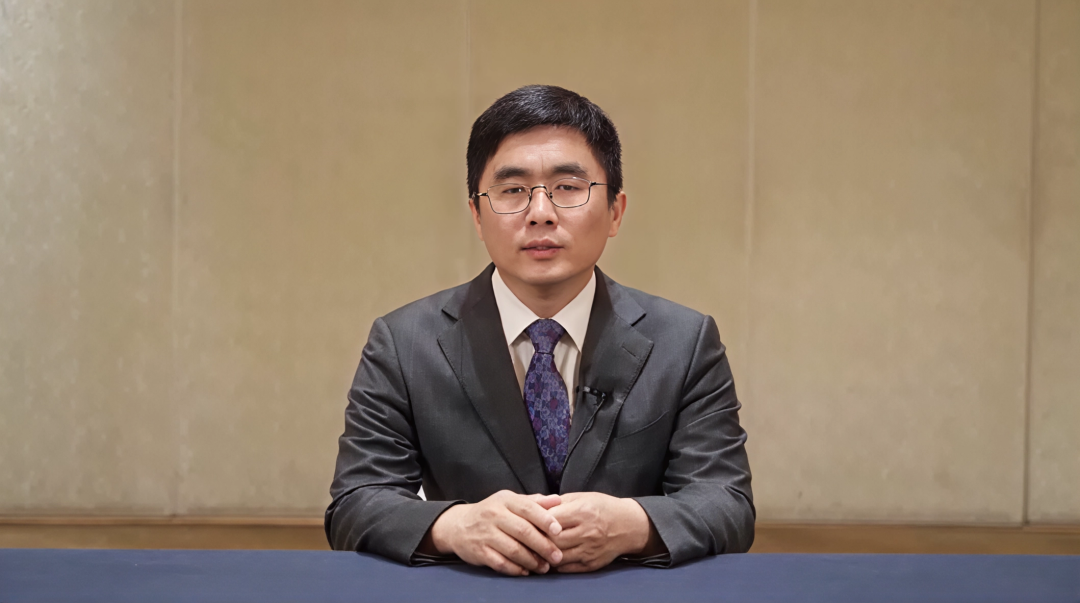
Zhao Yong, Secretary-General of CACA
The message was clear: cancer care can no longer rely on isolated specialties. With over 4.5 million new cancer cases reported annually in China, complex, multidisciplinary care is no longer optional; it’s essential.
As one expert put it, cancer is not a battle fought by a single doctor or department. It requires a coordinated team approach that spans the entire journey, from prevention and screening to diagnosis, treatment, and long-term recovery.
At United Family, this philosophy has already taken shape. The Beijing United Family Integrated Oncology Center was established to move beyond the traditional model of “patients navigating departments” toward one where “experts gather around the patient.”
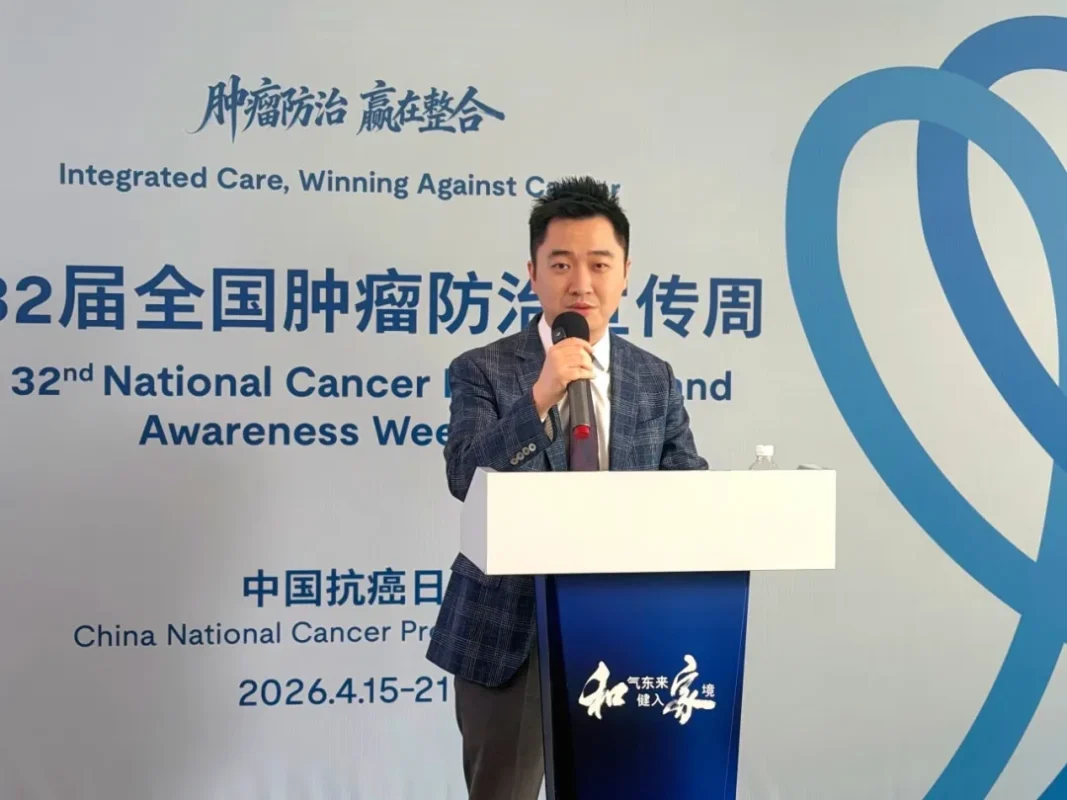
Xin Mengwei, Managing Director and Chief Strategy Officer of New Frontier Group
The result is a more seamless, patient-centered experience, one that connects every stage of care into a continuous, coordinated pathway.
Precision Screening and Early Intervention:
The First Line of Defense
One of the strongest themes from the salon was simple but critical: the earlier cancer is detected, the better the outcome.
Professor Wang Jianye, former President of Beijing Hospital, Chief Urology Expert of the Central Healthcare Commission, and Vice Chair of the Chinese Urological Association, noted: “Cancer control is not just about early screening, early diagnosis, and early treatment. What comes before that is even more important: public education on cancer prevention.”
He added a vivid analogy: “Public education is the golden key to unlocking nationwide cancer prevention and safeguarding people’s health.”
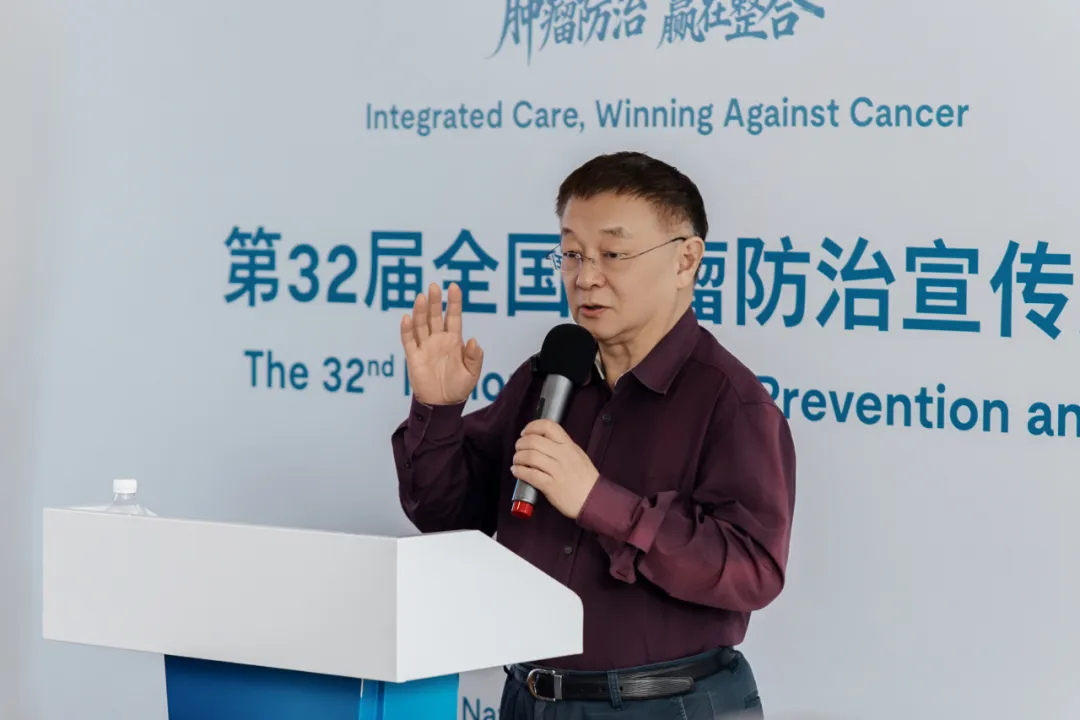
Professor Wang Jianye, former President of Beijing Hospital, Chief Urology Expert of the Central Healthcare Commission, and Vice Chair of the Chinese Urological Association
Without this golden key, the public cannot know when to get screened or how to take preventive action. That is exactly why Professor Zhu Gang, Director of the Beijing United Family Integrated Oncology Center, Chief Medical Officer of Beijing United Family Dongcheng Hospital, and Chair of Surgery and Urology, emphasizes that “prevention outweighs treatment.”
“The World Health Organization’s ‘one-third rule’ clearly states: one-third of cancers can be prevented, one-third can be detected early and cured, and the remaining third can achieve good outcomes with active treatment. Prevention comes first. The focus must shift forward to screening and early diagnosis,” said Professor Zhu.
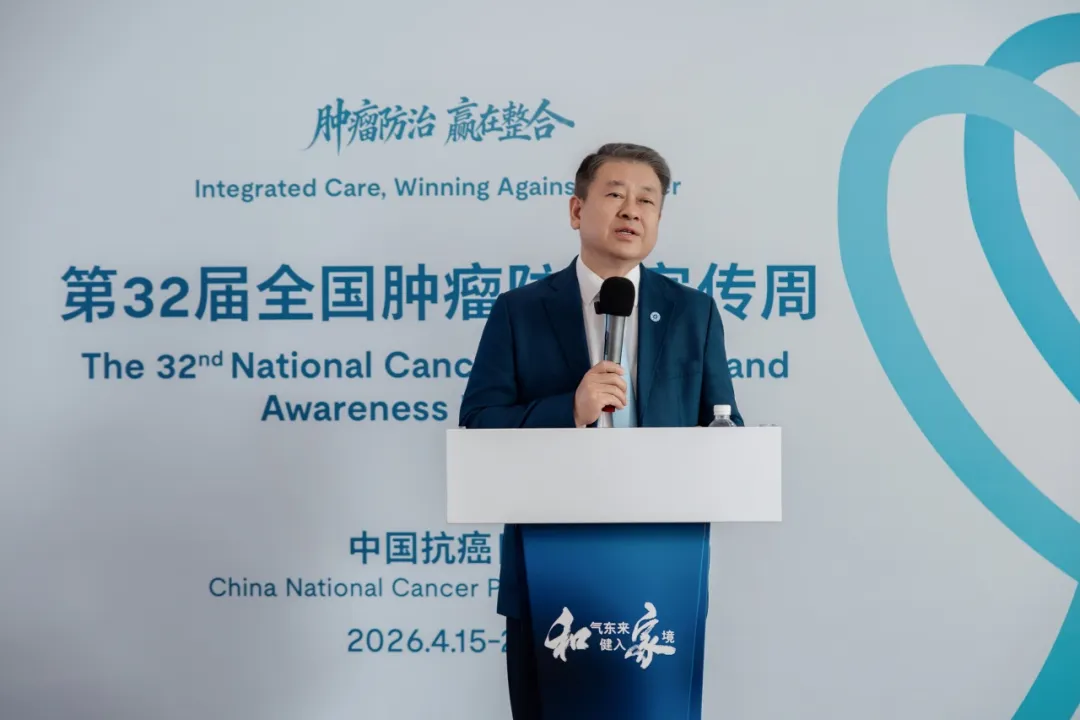
Professor Zhu Gang, Director of the Beijing United Family Integrated Oncology Center, Chief Medical Officer of Beijing United Family Dongcheng Hospital,
Take urological cancers as an example. Early stages often present no obvious symptoms, making routine screening essential. High-risk groups, such as men over 45 or those with a family history, are encouraged to undergo regular PSA testing and ultrasound exams to catch potential issues early.
A patient story shared during the event brought this point into sharp focus. A woman in her sixties from Hong Kong had long considered herself healthy. She dismissed warning signs, rising blood pressure, and persistent back and leg pain until the pain became unbearable. By the time she sought care, her kidney tumor had already metastasized.
Her reflection was simple but powerful: early screening is not just medical advice, it’s a responsibility to oneself.
Beyond Treatment:
From Survival to Full Recovery
Another key takeaway challenged a common misconception: that cancer care ends when treatment ends.
In reality, many patients continue to face lasting physical and emotional challenges after surgery or chemotherapy, ranging from fatigue and pain to anxiety and reduced quality of life.
That’s why a growing focus is being placed on “whole-cycle” cancer management, an approach that extends care beyond treatment to include rehabilitation, nutrition, psychological support, and long-term monitoring.
At Beijing United Family Dongcheng Hospital, this translates into a fully integrated model covering prevention, screening, diagnosis, treatment, and rehabilitation. Multidisciplinary teams (MDTs) collaborate across specialties to design personalized care plans, ensuring that patients are supported not just in surviving cancer, but in returning to a full and meaningful life.
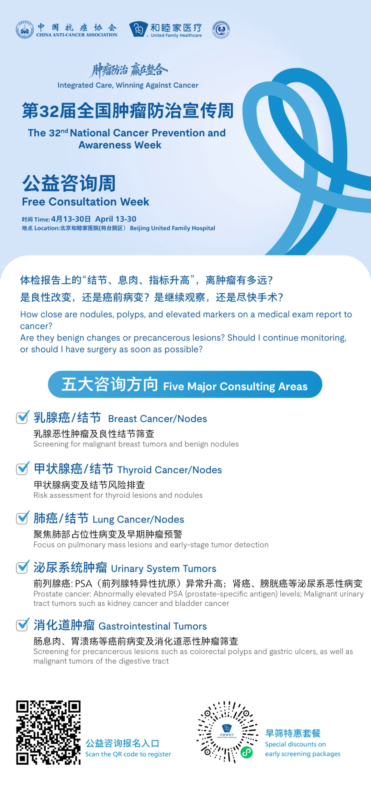
While Cancer Prevention and Treatment Awareness Week lasts only seven days, its core message should last a lifetime: Early screening. Early diagnosis. Early treatment.
As such, we’re offering free screenings until the end of the month. See the poster above for more details and scan the QR code to sign up.
Fighting cancer isn’t just about breakthrough therapies or advanced technology. It’s about informed decisions, proactive habits, and a healthcare system designed to support patients at every step.
That shift, from awareness to sustained action, is exactly what Beijing United Family Hospital is working to achieve.